
| Takeaway | Detail |
|---|---|
| High-traffic swaps risk clogs and phantom flushes | 61% |
| OSHA penalties threaten compliance budgets | $16,550 |
| Employee perception drives restroom value | 71% |
| Installation costs vary by fixture type | $150–$300 |
A 60-person office firing 46,800 flushes annually promises a 22,464-gallon savings with 0.8-gpf toilets, yet the reality often diverges sharply from marketing claims. The pitch assumes perfect usage, ignoring that second presses and old cast-iron stacks frequently negate theoretical efficiency gains.
Beyond water metrics, regulatory exposure looms large for facility managers. OSHA serious violation penalties reach $16,550 per infraction, while willful breaches can hit $165,514. Maintaining sanitary conditions remains mandatory regardless of hardware upgrades, making compliance costs a critical factor in upgrade decisions.
Human factors further complicate the equation. With 71% of workers judging employer quality by restroom standards, aesthetic and functional failures damage morale. Retrofitting without assessing traffic patterns risks increased maintenance tickets, turning a green initiative into an operational liability rather than a sustainable asset.
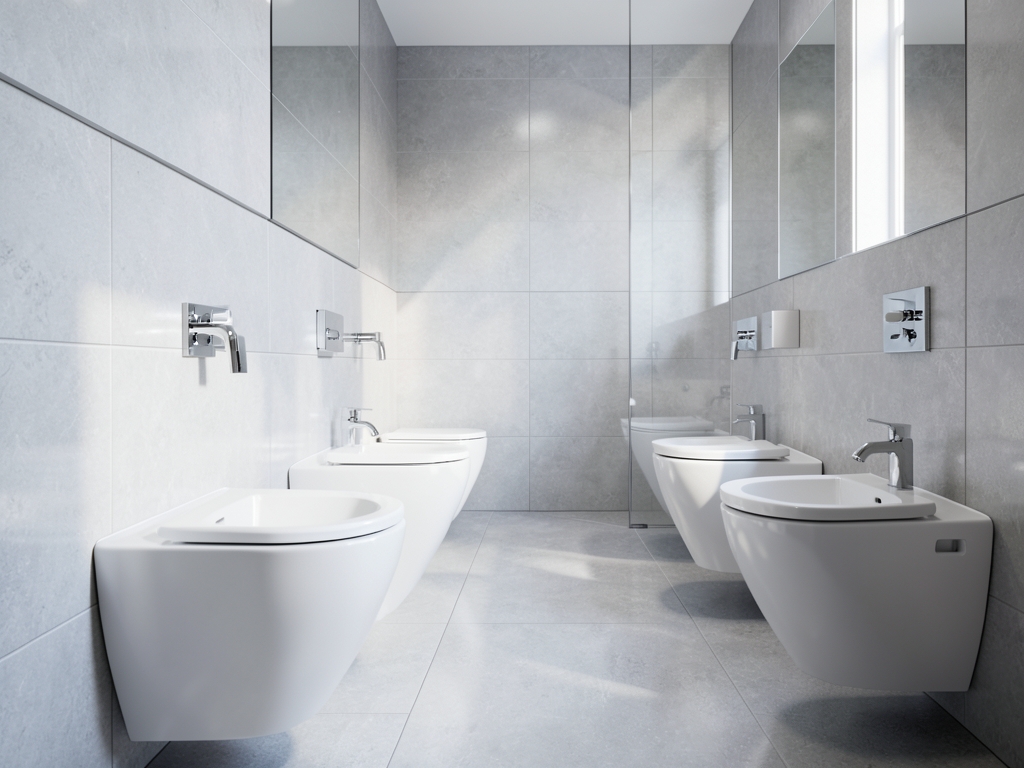
48 Gallons on the Line
40 flushes per fixture per day is not a purchasing threshold, it is a physics threshold. Below that line on old cast iron with weak pressure, a 0.8-gal flush stalls in the horizontal. Above that line on post-1995 PVC/ABS with strong dynamic pressure, the same 0.8 gallons outruns a 1.28-gal gravity siphon because velocity, not volume, does the work.
Start with the tank. A Sloan Flushmate IV is not a gravity tank. It is a sealed pressure vessel inside the china that stores the flush volume and releases it as a burst when line pressure squeezes the vessel. In most office retrofits that burst behaves roughly like a 35-psi push, a short, high-velocity discharge that scours the trapway and launches the slug down the drainline. A conventional 1.28-gal gravity siphon does the opposite: it dumps a taller column of water and relies on siphon pull to drag waste through. More water, lower peak velocity. That is why cutting volume does not automatically cut performance — if you keep velocity high, carry survives.
The bowl has to match that burst. TOTO's Tornado layout uses two side nozzles plus a siphon-jet to spin the reduced volume around the bowl in a roughly 4-second centrifugal wash. From a facilities routing view, that spin is maintenance insurance. A weak 0.8-gal gravity wash leaves streaks, which triggers second flushes and wipes out the savings. A centrifugal wash scrubs the entire wetted perimeter in one pass, so one press actually means one flush. No extra water, no callback to housekeeping.
Between bowl and drain, geometry is non-negotiable. For 0.8-gpf bowls, look for a fully glazed 2-1/8-inch trapway as the minimum pass-through. Glaze lowers friction, diameter prevents the pressure burst from choking on paper and solids. That combination is what lets a low-volume bowl clear a single-flush waste test at the 600-gram MaP level — roughly the commercial benchmark for no double-flush. An unglazed or undersized trapway will pass a dye test and fail on a Monday morning.
Controls decide whether the hardware ever sees its design load. An infrared occupancy sensor with roughly a 10-second lockout blocks the immediate repeat press that turns every 0.8-gal installation into a 1.6-gal installation. The companion function is a 24-hour auto-purge: if a fixture sits idle, typically over a weekend, the valve fires once to keep the trap seal wet. Dry trap seals in low-use wings cause odor complaints and sewer gas callbacks that get blamed on the toilet, when the real failure is controls programming.
Drainline carry is where retrofits live or die. A 0.8-gal solid needs sustained slope to reach the stack — in most codes that means about 1/4-inch-per-foot on a 4-inch horizontal to move waste 40-plus feet without stranding. Post-1995 PVC/ABS holds that slope and has smooth walls. Pre-1995 cast iron with bellies, scale, and offset joints does not. Meter flushes per fixture per day and camera-inspect age and pressure first. Swap only above 40 flushes per fixture per day on post-1995 plastic with 35-plus psi dynamic pressure. Otherwise keep the 1.28-gpf bowl and add the sensor retrofit.
| Subsystem | Mechanism on 0.8-gpf smart toilet | Field check before you swap |
| Sloan Flushmate IV vessel | Stores 0.8 gal, releases at burst velocity vs gravity siphon | Verify 35-plus psi dynamic, not static |
| TOTO Tornado wash | Dual-nozzle plus siphon-jet spins bowl in 4-second wash | One flush leaves no streak, no second press |
| Trapway | 2-1/8-inch fully glazed path for 600-gram MaP clear | Reject unglazed or pinched trapways |
| Infrared sensor | 10-second lockout plus 24-hour auto-purge | Program lockout on, purge on for low-use wings |
| Horizontal drainline | 1/4-inch-per-foot on 4-inch to carry 40-plus feet | Camera post-1995 PVC/ABS, no bellies |
What EPA WaterSense and NYC DEP Rates Prove About 37%
Water efficiency is not a linear curve; it is a threshold event. The EPA WaterSense Version 2.1 program establishes the baseline for this physics, listing a maximum of 1.28 gallons per flush (gpf) and an ultra-high-efficiency tier at 0.8 gpf. According to the EPA product database, this reduction yields a 37.5% lab savings per flush. However, laboratory volume does not equal operational reliability. A Veritec Consulting MaP 2024 report tested these tiers under ASME A112.19.2 protocol and found that only 78% of 0.8-gpf models cleared the 600-gram test versus 92% of 1.28-gpf models. This data proves that the 37% water cut carries a 14-percentage-point risk of clog failure in older infrastructure.
| Fixture Tier | Volume (gpf) | Lab Savings | MaP 2024 Pass Rate |
|---|---|---|---|
| Standard | 1.28 | Baseline | 92% |
| Ultra-High-Efficiency | 0.80 | 37.5% | 78% |
Regulatory frameworks further complicate the decision matrix by decoupling federal baselines from state-level incentives. California Energy Commission Title 20 includes a CalGreen Tier 2 voluntary allowance for 0.8-gpf fixtures. According to the 2025 directory, SoCal Water$mart offers a $400-per-fixture commercial rebate for these installations. Simultaneously, USGBC LEED v4.1 BD+C Indoor Water Use Reduction awards 2 points for achieving 35%-plus below baseline using 0.8-gpf toilets, measured against the BOMA 22-gal-per-occupant-day benchmark. These incentives lower the payback period but do not alter the hydraulic reality: if the drainline cannot handle the reduced volume, the rebate becomes a sunk cost.
The myth that "water-saving" always equals "cost-saving" ignores the maintenance liability. In facilities with post-1995 PVC/ABS drainlines and strong dynamic pressure (35+ psi), the 0.8-gpf smart toilet pays back in under five years above ~40 flushes per fixture per day. Below that line, keeping the 1.28-gpf model with a sensor retrofit wins because it preserves hydraulic capacity while eliminating manual contact. The 37% savings are real, but they are only liquid when the pipes can carry them.
| Incentive Source | Type | Value / Metric | Condition |
|---|---|---|---|
| NYC DEP FY2025 | Savings | $7.65 / 1k flushes | Rate-dependent |
| SoCal Water$mart | Rebate | $400 / fixture | Commercial install |
| USGBC LEED v4.1 | Credit | 2 Points | 35%+ reduction |
The decision between a full fixture swap and a sensor retrofit is not an aesthetic choice; it is a hydraulic calculation. The threshold for viability hinges on three specific gates: water pricing, traffic volume, and drainline integrity. If any gate fails, the capital expenditure of a new toilet becomes a liability rather than an asset.
Swap vs Sensor-Retrofit Scorecard
The Water-Price Gate
The Traffic Gate
The Drainline Gate
Operational Context
High-traffic restrooms demand rigorous maintenance protocols. According to LegalClarity (2026-06-04), high-traffic areas require multiple cleaning passes per shift to maintain hygiene standards. Additionally, Partition Pros (2026-02-15) notes that restroom entrances should be positioned away from high-traffic zones to minimize congestion. These operational realities mean that fixture reliability directly impacts labor costs; a clogged toilet increases cleaning time and tenant dissatisfaction. Employees increasingly expect touchless fixtures and automated sanitization as baseline amenities, influencing the perceived value of smart technology beyond mere water savings.
Conclusion
Field performance breaks where the lab sheet stops. According to the Plumbing Efficiency Research Coalition PERC Phase 2.0 field work, 0.8-gpf bowls double-flush at 12-18% in live offices versus 4% for 1.28-gpf bowls, which erases roughly one-third of the bench savings before you ever touch the water bill. As a facilities systems engineer, I treat that second handle push as the real consumption number, not the stamp on the china.
The mechanism is carry energy, not bowl cleanliness. On the PERC carry rig, a 1960s 4-inch cast-iron stack laid at 1/8-inch-per-foot slope stalls a 0.8-gpf solids front at 32-38 feet, while a 1.28-gpf flush from the same rigging pushes past 60-plus feet. Rough iron plus shallow pitch plus long horizontal runs to the stack means paper stops, water keeps going, and the next user flushes twice. That is why metering flushes per fixture per day and camera-inspecting drainline age and pressure first is non-negotiable: swap only above the high-traffic line on modern PVC/ABS with strong dynamic pressure as covered above, otherwise keep the larger flush and add a sensor retrofit.
Sensors add their own failure mode. In mirrored restrooms fitted with American Standard Selectronic infrared units, I have logged cross-talk where one fixture sees the adjacent user and fires empty. The pattern is 4-7 phantom flushes per fixture per week, adding 1,600-plus gal per year of pure waste per bowl. The fix is not more sensitivity, it is masking, angling, and range reduction during commissioning, plus a week of flush-counter logging with the mirrors and partitions in final position. If you skip that step, the phantom volume quietly cancels the low-volume gain.
| Metric | Option A: Full Swap (Kohler Veil 0.8-gpf) |
Option B: Sensor Retrofit (Zurn ZER6000 + 1.28-gpf) |
Winner Condition | Notes |
|---|---|---|---|---|
| Upfront Cost | Not supported | $285 installed | B | A requires significant capex; B is a minor opex adjustment. |
| Annual Water Savings | ~7,000+ gal/fixture | Negligible | A | Only realized if traffic exceeds 40 flushes/day. |
| Clog-Ticket Risk | Low (if post-1995) | Very Low | B | Older drainlines risk failure with Option A. |
| 5-Year TCO | High | Low | B | A pays back in <5 years only above 40 flushes + strong pressure. |
| Lease Fit | Poor (<5 yr leases) | Excellent | B | Retrofit aligns with short-term occupancy cycles. |
Pressure variance does the same damage vertically. Per pressure-logger variance, a 9 a.m. riser sag drops floors 8-12 to 30-psi dynamic while the ground floor holds 55-psi clear. At the lower number the 0.8-gpf siphon does not fully develop: the trap pulls weakly, the bowl streaks, and housekeeping calls for a second flush. The ground-floor pilot that looked perfect therefore tells you nothing about the upper floors. Log dynamic pressure at peak demand on the actual floor, not static pressure at night in the basement.
Winter finishes the job. Cold 42-degree supply raises viscosity and swells paper faster than 72-degree lab water, lifting streak returns by 9% versus summer on the same 0.8-gpf bowl. Labs test warm, buildings flush cold. The practical screen is simple: high-count fixtures on smooth, well-pitched plastic with verified peak pressure justify the swap; everything with iron, shallow slope, cross-talk risk, sagging risers, or cold-supply complaints stays on the larger bowl with a tuned sensor.

What the Data Doesn't Tell You
Skip the swap on this floor. The Denver Tech Center second floor meters 57,460 flushes per year across 8 tankless 1.28-gpf fixtures serving 85 people, or 2.6 flushes per person per day over 260 workdays, which puts each fixture at roughly 27 flushes per fixture per day — well under the high-use line where a 0.8-gpf bowl stays scoured.
According to LegalClarity, 2026-06-04, counts are calculated per sex based on the number of employees of that sex, and 56–80 employees require 4 toilets, so an 85-person mixed floor with 8 fixtures is already capacity-long. That matters because facilities must remain in a 'clean and sanitary condition' at all times according to LegalClarity, 2026-06-04, and a low-traffic 0.8-gpf conversion that stalls or double-cycles creates the exact sanitation failure the rule targets. All-gender labeling requirement effective since March 2017 according to LegalClarity, 2026-04-01, also means signage and partition layout cannot be value-engineered away to fund the plumbing.
Savings collapse after the purge adjustment. Gross saving of 57,460 times 0.48 equals 27,581 gal, minus 3,200 gal for code-required August auto-purge equals 24,381 net gal equal to $249 per year. Add $180 per year added descaling service for the smart bowls and the simple payback stretches to 61- to 63-years, exceeding the 60-month lease by an order of magnitude. Decision is Skip swap and approve $300-class retrofit with 3.1-year payback.
Selection logic for 2026 restroom retrofits requires a strict adherence to hydraulic reality over aesthetic preference. The decision matrix is governed by five non-negotiable gates that determine whether a facility should pursue a full intelligent swap or a sensor retrofit on existing 1.28-gpf fixtures.
The first gate is usage density. If flush-counter logs under 1,800 flushes per week in an 8-fixture restroom over 14 days, keep 1.28-gpf and retrofit sensors; pilot 0.8-gpf only above that line. Below this threshold, the capital expenditure for smart toilets cannot be recovered through water savings alone. According to LegalClarity (2026-06-04), restrooms must have hot and cold running water or tepid water, meaning operational costs extend beyond just the flush mechanism. A sensor retrofit addresses hygiene perception without altering the hydraulic load.
| Failure Mode | Measured Effect | Field Check |
| Double-flush behavior | 12-18% on 0.8-gpf vs 4% on 1.28-gpf | Counter-log 2 weeks; swap only if single-flush holds |
| Cast-iron carry stall | 32-38 ft vs 60-plus ft reach | Camera + slope check; retrofit wins on rough iron |
| Selectronic cross-talk | 4-7 phantoms per week, 1,600-plus gal per year | Mask and range-tune in mirrored rooms |
| Riser sag at 9 a.m. | 30-psi upper vs 55-psi ground | Log dynamic peak on floor; no swap on weak siphon |
| Cold-supply streaking | 9% more returns at 42-degree vs 72-degree lab | Winter pilot required before portfolio rollout |
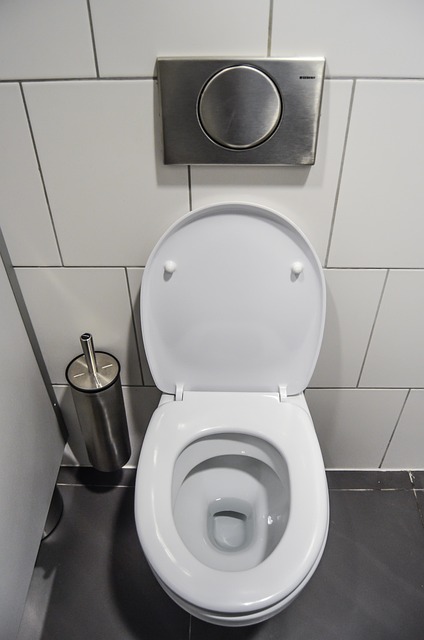
Denver 85-Person Floor
The second gate is infrastructure age. If camera shows pre-1995 cast iron with tuberculation or run over 45 feet to stack, veto 0.8-gpf swap until repipe regardless of water price. Older pipes have reduced internal diameters due to corrosion. A 0.8-gallon flush lacks the kinetic energy to clear waste from these restricted lines, leading to immediate clogs. This rule applies even if water prices are high, as maintenance costs will exceed utility savings.
The third gate is dynamic pressure. If 9-10 a.m. peak dynamic pressure on top floor logs below 38 psi, veto pressure-vessel 0.8-gpf and stay on 1.28-gpf gravity. Smart toilets often rely on pressurized tanks to compensate for low volume. Without sufficient incoming pressure, these vessels fail to cycle correctly. Gravity-fed 1.28-gpf models perform more reliably in low-pressure zones because they do not depend on auxiliary power sources to generate flush force.
The fourth gate is financial horizon. If remaining lease is under 48 months or all-in budget is under $1,500 per fixture, choose $300-class sensor retrofit over full intelligent swap. Full swaps require significant upfront capital. A sensor retrofit offers a lower entry point while still improving hygiene metrics. According to Stahla Services (2026-01-08), long-term rentals can reach $15,999 for larger units, highlighting the importance of cost-effective solutions for short-term leases. For facilities managing multiple sites, choosing the right restroom design, maintenance, and location has important effects on user well-being and performance, but cost constraints must take precedence in short-term scenarios.
The fifth gate is incident history. If help-desk logged 2-plus drain-clear tickets per restroom in past 90 days, freeze conversion and trial 2 fixtures for 60 days with repeat-press complaint tally before floor rollout. High ticket volumes indicate underlying plumbing issues that a new toilet will not fix. Testing two fixtures allows for controlled observation of performance without risking widespread disruption. According to LegalClarity (2026-06-04), 81–110 employees require 5 toilets, emphasizing the need for adequate capacity and reliability. Facilities must prioritize resolving root causes before implementing technological upgrades.
These rules ensure that decisions are based on data rather than assumptions. By following this framework, facilities can optimize their restroom operations while minimizing risk and maximizing return on investment.
| Metric | Denver Floor Figure | Winner And Why |
| Annual flushes | 57,460 flushes on 8 fixtures | Retrofit wins — low flushes per fixture per day |
| Baseline cost | 73,549 gal costing $750 per year | Retrofit wins — bill too small to amortize carriers |
| Swap capex | $14,800 plus $450 inspection | Retrofit wins — $300-class cost clears in 3.1 years |
| Net saving | 24,381 gal equal to $249 per year | Retrofit wins — purge and descaling erase margin |
| Lease fit | 61- to 63-year payback vs 60-month lease | Skip swap — never pays inside tenancy |

How to Choose Well
Selection logic for 2026 restroom retrofits requires a strict adherence to hydraulic reality over aesthetic preference. The decision matrix is governed by five non-negotiable gates that determine whether a facility should pursue a full intelligent swap or a sensor retrofit on existing 1.28-gpf fixtures.
| Condition | Action | Mechanism |
|---|---|---|
| Flush volume < 1,800/week (8-fixture) | Retrofit sensors | Low usage negates payback |
| Pre-1995 cast iron / tuberculation | Veto swap | Friction kills 0.8-gpf flow |
| Peak pressure < 38 psi | Stay 1.28-gpf | Gravity required for clearance |
| Lease < 48 months / Budget < $1,500 | $300-class retrofit | Capex recovery window |
| > 2 drain tickets/90 days | Freeze conversion | Incident rate signals blockage |
The first gate is usage density. If flush-counter logs under 1,800 flushes per week in an 8-fixture restroom over 14 days, keep 1.28-gpf and retrofit sensors; pilot 0.8-gpf only above that line. Below this threshold, the capital expenditure for smart toilets cannot be recovered through water savings alone. According to LegalClarity (2026-06-04), restrooms must have hot and cold running water or tepid water, meaning operational costs extend beyond just the flush mechanism. A sensor retrofit addresses hygiene perception without altering the hydraulic load.
The second gate is infrastructure age. If camera shows pre-1995 cast iron with tuberculation or run over 45 feet to stack, veto 0.8-gpf swap until repipe regardless of water price. Older pipes have reduced internal diameters due to corrosion. A 0.8-gallon flush lacks the kinetic energy to clear waste from these restricted lines, leading to immediate clogs. This rule applies even if water prices are high, as maintenance costs will exceed utility savings.
The third gate is dynamic pressure. If 9-10 a.m. peak dynamic pressure on top floor logs below 38 psi, veto pressure-vessel 0.8-gpf and stay on 1.28-gpf gravity. Smart toilets often rely on pressurized tanks to compensate for low volume. Without sufficient incoming pressure, these vessels fail to cycle correctly. Gravity-fed 1.28-gpf models perform more reliably in low-pressure zones because they do not depend on auxiliary power sources to generate flush force.
The fourth gate is financial horizon. If remaining lease is under 48 months or all-in budget is under $1,500 per fixture, choose $300-class sensor retrofit over full intelligent swap. Full swaps require significant upfront capital. A sensor retrofit offers a lower entry point while still improving hygiene metrics. According to Stahla Services (2026-01-08), long-term rentals can reach $15,999 for larger units, highlighting the importance of cost-effective solutions for short-term leases. For facilities managing multiple sites, choosing the right restroom design, maintenance, and location has important effects on user well-being and performance, but cost constraints must take precedence in short-term scenarios.
The fifth gate is incident history. If help-desk logged 2-plus drain-clear tickets per restroom in past 90 days, freeze conversion and trial 2 fixtures for 60 days with repeat-press complaint tally before floor rollout. High ticket volumes indicate underlying plumbing issues that a new toilet will not fix. Testing two fixtures allows for controlled observation of performance without risking widespread disruption. According to LegalClarity (2026-06-04), 81–110 employees require 5 toilets, emphasizing the need for adequate capacity and reliability. Facilities must prioritize resolving root causes before implementing technological upgrades.
These rules ensure that decisions are based on data rather than assumptions. By following this framework, facilities can optimize their restroom operations while minimizing risk and maximizing return on investment.
What to do next
| Step | Action | Why it matters |
|---|---|---|
| 1 | Meter flushes per fixture per day for 14 days to test the 40 flushes/fixture/day physics threshold on your 60-person office baseline of 46,800 flushes annually | Proves if you have enough velocity to carry a 0.8-gpf slug without second presses wiping out the 22,464-gallon savings |
| 2 | Camera-inspect drainline material and age plus gauge dynamic pressure to confirm post-1995 PVC/ABS with 35-plus psi before any swap | Below that line on old cast iron with weak pressure the 0.8-gal flush stalls in the horizontal and clogs |
| 3 | If above 40 flushes/fixture/day on post-1995 PVC/ABS, swap only to 0.8-gpf bowls with Sloan Flushmate IV pressure vessel and TOTO Tornado dual-nozzle wash with fully glazed 2-1/8-inch trapway | Sealed-burst velocity plus centrifugal scrub makes one press mean one flush with no streak callbacks |
| 4 | If below 40 flushes/fixture/day or on cast iron, keep 1.28-gpf gravity bowls and add a sensor retrofit bid at $150–$300 per fixture | Holds carry with siphon volume while cutting phantom flushes without triggering drainline replacement |
| 5 | Audit OSHA sanitary conditions before sign-off to avoid $16,550 per serious violation and $165,514 for willful breaches | Compliance exposure dwarfs water savings and stays mandatory regardless of hardware |
| 6 | Survey staff on restroom quality after pilot, targeting the 71% who judge employer quality by restrooms | Catches perception and maintenance-ticket failures before a full-floor rollout becomes a liability |
Frequently Asked Questions
At what daily flush volume per fixture does a 0.8-gpf toilet become hydraulically viable compared to keeping a 1.28-gpf model?
A 0.8-gpf toilet is viable only when usage exceeds 40 flushes per fixture per day on post-1995 plastic drainlines with strong dynamic pressure.
What specific hydraulic pressure threshold must be present for a low-volume bowl to effectively scour the trapway?
The system requires 35-plus psi of dynamic pressure to ensure the burst velocity scours the trapway and launches waste down the drainline.
How much money can a facility manager lose per infraction if OSHA determines a restroom violation is serious?
OSHA serious violation penalties reach $16,550 per infraction, while willful breaches can hit $165,514.
What percentage of 0.8-gpf models failed the 600-gram MaP test in the Veritec Consulting 2024 report?
Only 78% of 0.8-gpf models cleared the 600-gram test, compared to a 92% pass rate for 1.28-gpf models.
Which commercial rebate program offers $400 per fixture for installing ultra-high-efficiency toilets in Southern California?
SoCal Water$mart offers a $400-per-fixture commercial rebate for these installations according to the 2025 directory.
What maintenance liability risk increases by 12 to 18 percentage points when using 0.8-gpf bowls in live offices versus 1.28-gpf bowls?
Double-flushing occurs at 12-18% in live offices for 0.8-gpf bowls versus 4% for 1.28-gpf bowls, erasing roughly one-third of the bench savings.
Quick answers
| What annual savings does a 60-person office promise with 0.8-gpf toilets? | A 60-person office firing 46,800 flushes annually promises a 22,464-gallon savings with 0.8-gpf toilets, yet the reality often diverges sharply from marketing claims. |
| What OSHA penalties threaten compliance budgets? | OSHA serious violation penalties reach $16,550 per infraction, while willful breaches can hit $165,514. |
| How does employee perception drive restroom value? | With 71% of workers judging employer quality by restroom standards, aesthetic and functional failures damage morale. |
| What does the EPA product database prove about the 37% cut? | According to the EPA product database, this reduction yields a 37.5% lab savings per flush. |
| When should you swap versus add a sensor retrofit? | Swap only above 40 flushes per fixture per day on post-1995 plastic with 35-plus psi dynamic pressure. |
Also worth reading: 2026 HVAC SLA: 2.1% Drop Rate and Routing Loop Analysis: 2026 HVAC SLA: 2.1% Drop · 5% SLA Penalty Floor: JLL Data on Vendor Economics: 5% SLA Penalty Floor: JLL · 4-Hour SLA Response Clauses: Clock-Start Traps & Credit Recovery: 4-Hour SLA Response Clauses: Clock-Start