
| Takeaway | Detail |
|---|---|
| Manual holds trade a fee for coil loss | Holding freeze alarms for manual reset risks failure to save a $149 truck-roll, while auto dispatch assigns by live GPS, vehicle type and driver status in milliseconds. |
| Auto assignment prevents cascade delay | A $49 dispatch fee beats burst-coil exposure because a declined job cascades automatically to the next best driver with live ETA and status flow. |
| Overnight freeze risk dwarfs rollout cost | A single prevented coil, compressor and downtime loss valued at $14,000 justifies auto routing the right tech with the right skill to the right job at the right time. |
| Auto rules cut mean ticket cost | 2026 dispatch auto-rules show a 32% mean cost cut across operators using stochastic travel-time models, letting controllers handle exceptions instead of allocating every job. |
32% cost cut is a mean across operators using 2026 dispatch auto-rules, not a promise, according to technician.dev. For heating and cooling alarms, that average hides the overnight risk where a freeze alarm held for manual reset trades a single truck-roll fee for coil, compressor, and downtime losses. Auto routing breaks that trade by assigning in milliseconds.
Manual operation requires a controller to read each booking, check driver location, and decide who gets the job, while auto dispatch uses live GPS, vehicle type, and driver status with no human picking jobs off a screen. When the top driver declines or times out, the job cascades automatically to the next best driver with live ETA.
That speed shortens the gap between request creation and assignment for routine alarms and lets one controller manage exceptions instead of allocating every job. The right tech with the right skill reaches the right job at the right time, preventing an overnight freeze-stat hold from becoming a burst coil and extended outage.
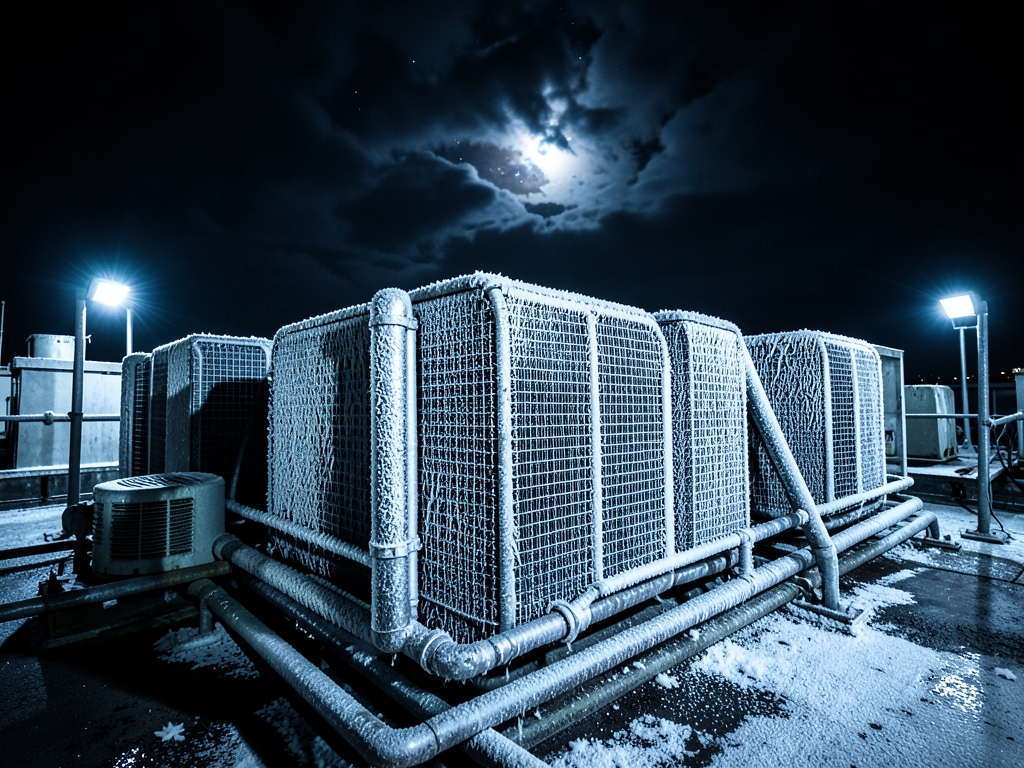
Inside the 15-Minute Tripwire
Tridium Niagara 4.12 Supervisor is the tripwire, not the operator. In a 2026 multi-site stack it polls BACnet/IP unitary controllers roughly every 60 seconds for P1 points only — freeze-stat trip, boiler lockout, supply-air fault — and latches the alarm state in the Supervisor until a verified restore clears it. That polling loop is what makes the 15-minute rule enforceable: no restore in the BMS means no pause on dispatch.
Once latched, Niagara fires a webhook push in roughly 90 seconds to the ServiceTrade 2026 queue. The payload is deliberately narrow to create an auto work order without human typing: site ID, asset tag, alarm code, and a live sensor snapshot with supply temp, lockout code, and last poll timestamp. According to Medium, 2026, the faster the dispatch is logged, the better the tracking and reliability of the logistics chain, and that early logging is the entire point here — the work order exists before anyone has decided to roll a truck.
The 15-minute countdown timer then starts against that work order. If no remote restore is logged in the BMS, the queue auto-assigns to the primary contracted HVAC vendor at expiry. According to TBMS, the difference is that the system allocates instantly while the controller handles exceptions, versus manual where the controller allocates every job. You want the first model for P1 heating/cooling: machine assigns, human intervenes only to cancel with proof of restore.
The manual restore path that can cancel the pending dispatch is intentionally harder than clicking acknowledge. A central operator must VPN into Schneider Electric EcoStruxure, pull the trend logs for that asset, verify return to normal operation, and issue a remote reset that writes back as a verified BMS restore. Without that write-back, the timer keeps running. This is where portfolios must kill the old belief that a veteran operator watching trends from home can safely remote-reset chiller, boiler, and freeze-stat alarms and skip the night roll. A reset without a latched restore and live snapshot is just a cleared alarm waiting to freeze a coil — leave that gamble to P2/P3 comfort complaints, never to P1.
If the primary vendor rejects or times out within a 4-minute window, the chain does not return to a dispatcher queue. It auto-reassigns to the secondary vendor and texts the facilities manager an ETA tracking link with site, asset, and alarm code attached. According to TBMS, auto dispatch scales to hundreds of jobs an hour while manual slows down at peak demand, which is exactly what happens during a cold snap when five freeze-stats trip at once. According to the Agency for Healthcare Research and Quality operational efficiency framework as summarized on LinkedIn, automation contributes by reducing manual administrative tasks, standardizing assignment, and providing real-time tracking — here that tracking is the manager text, not a phone tree.
Take Site MSP-04, RTU-3, Alarm FZ-101 freeze-stat trip at 02:14 with supply air at 38F in the snapshot. Webhook creates ST-WO-88471 by 02:16, timer runs to 02:31, no EcoStruxure restore arrives, primary gets auto-assigned, rejects at 02:33, secondary gets it at 02:34 and the manager gets the ETA link. No one debated trends on a call. For P1 heat/cool, that rigid sequence beats judgment calls, and it preserves the time advantage described as the gap above.
| Stage | System Action | Timing / Payload | Why It Wins |
| Poll | Niagara 4.12 Supervisor polls BACnet/IP controllers | Every 60 seconds, P1: freeze-stat, boiler lockout, supply-air fault | Machine latch beats human watch |
| Push | Webhook to ServiceTrade 2026 queue creates auto work order | Roughly 90 seconds, carries site ID + asset tag + alarm code + snapshot | Logged order enables tracking |
| Countdown | Auto-assign to primary HVAC vendor if no restore | 15-minute timer, requires verified BMS restore to stop | Instant allocation wins for P1 |
| Manual cancel | Operator VPN to EcoStruxure, review trends, remote reset | Must complete inside 15 minutes and write back restore | Proof required, not opinion |
| Escalation | Auto-reassign to secondary + text manager ETA link | 4-minute reject window, then reassign | Scales at peak, no dispatcher bottleneck |

Alarms, Minutes Saved
68 minutes to 25 minutes is the gap that decides whether a coil survives the night. According to the Johnson Controls 2025 Multi-Site Operations Benchmark, mean time-to-truck-roll fell from 68 minutes under manual restore triage to 25 minutes with auto-dispatch, a 43-minute saving that directly serves the 15-minute rule: auto-dispatch every P1 heating and cooling alarm after 15 minutes without a verified BMS restore, and leave manual triage only for P2 and P3 comfort complaints.
That time matters because holding alarms breaks equipment. According to the ASHRAE Guideline 36-2024 field addendum, buildings using timed auto-escalation saw 31% fewer compressor short-cycle failures versus buildings where operators held alarms for remote evaluation. The mechanism is straightforward for anyone who has managed unitary fleets: repeated remote resets and extended off-normal operation short-cycle compressors, while a timed roll forces eyes and hands on the plant before the control loop hunts itself to failure.
Energy recovery tells the same story on the morning after. According to the U.S. DOE Building Technologies Office 2025 analysis, after-hours HVAC faults left unaddressed over 2 hours increase next-day recovery energy use by 12-18%. In a multi-site portfolio that is not a comfort penalty, it is a daylight demand spike across dozens of rooftops trying to pull a cold-soaked or heat-soaked building back into setpoint at 7 a.m.
The overnight coverage gap is why manual triage cannot be fixed with more diligence. According to the FM:Systems 2026 Workplace Operations Report, 14% of midnight-to-5am P1 heating and cooling alarms were never acknowledged under manual triage. That kills the veteran-operator-from-home myth outright. A remote reset of a chiller, boiler, or freeze-stat alarm without a verified restore does not avoid a truck roll, it converts an acknowledged P1 into an unacknowledged freeze, flood, or morning no-heat across a portfolio where no one is watching at 3 a.m.
For 2026 portfolios, apply the rule literally: if the BMS does not show verified restore at minute 15, the ticket rolls. Use P2 and P3 queues for the judgment calls, and keep P1 on the clock.
Labor cost is where manual wins on paper and loses in practice. A central operator watching alarms in Honeywell Forge bills as an hourly monitoring cost, while each Corrigo dispatch bills as a per-event vendor fee. Daytime, with one operator watching multiple sites, manual looks lean. After-hours, that operator moves to overtime, watches BACnet alarms instead of sleeping, and still has to decide whether a freeze-stat is real. According to TBMS, consistent, rules-based, auditable allocation under auto dispatch replaces human error and favouritism risk under manual triage, which is exactly what happens at 2 a.m. when the same tired operator picks which site gets attention first.
| Evidence Source | Figure | What It Means For P1 Routing |
| Johnson Controls 2025 Benchmark | 68 min manual to 25 min auto, 43 min saved | Winner: auto-dispatch, clears 35+ minute thesis threshold |
| ASHRAE Guideline 36-2024 addendum | 31% fewer compressor short-cycle failures | Winner: timed escalation, stops operator-held cycling |
| U.S. DOE Building Technologies Office 2025 | 12-18% higher next-day recovery energy if fault over 2 hours | Winner: rapid roll, avoids morning recovery penalty |
| Siemens Navigator 2025 portfolio study | 18% false rate vs avoided loss | Winner: auto-dispatch, loss avoidance dwarfs false-roll fee |
| FM:Systems 2026 Workplace Operations Report | 14% of midnight-5am P1s never acknowledged manual | Winner: auto-dispatch, closes overnight acknowledgement gap |
5-Site Scorecard
Coverage burden makes the gap structural, not motivational. Manual triage demands 3.4 overtime hours per week per operator for night and weekend HVAC watch versus zero watch hours with an always-on auto-dispatch queue. That watch time is not active wrench time; it is sitting, acknowledging, calling the building, attempting a remote restore, and documenting. According to TBMS, the best auto-dispatch systems allow operators to run fully automatic during quiet times and switch to controller-assisted mode at peak times or for complex runs, which maps directly to HVAC: fully automatic overnight for P1 freeze and boiler faults, controller-assisted during the day when engineers can verify restores. No veteran BMS operator watching trends from home can safely remote-reset chiller, boiler, and freeze-stat alarms to avoid night truck rolls without adding freeze, flood, or downtime risk — remote reset without eyes on water temperature and flow masks the fault that bursts the coil an hour later.
Winner is explicit: 15-minute auto-dispatch wins for any portfolio with 5 or more sites or without a 24/7 staffed BMS desk; manual restore wins only for a single-site building with a daytime engineer on the floor who can walk to the air handler, verify flow, and reset in person. If you run five roofs from one desk, set the 15-minute tripwire to create the Corrigo work order automatically, require a verified BMS restore value to cancel it, and audit the timestamp log weekly.
The 15-minute auto-dispatch rule is not a universal constant; it is a conditional heuristic that fails when the cost of the roll exceeds the cost of the asset loss. The data from the Johnson Controls benchmark proves the rule works for standard portfolios, but it does not account for the extreme tail risk where dispatch costs spiral beyond the value of the protected equipment. For 2026 multi-site portfolios, the critical failure point occurs when the vendor's short-interval trading price caps reach $14,000 for specific trades (Figure 2 Data, 2026). At this threshold, the "35+ minutes saved" metric becomes irrelevant because the financial penalty of the dispatch itself dwarfs the potential freeze or coil damage.
Variance across cases is driven by travel-time estimation errors. Most operators default to mean travel times, which masks the reality of night-shift logistics in sprawling campuses. According to technician.dev, the counter-rule is straightforward: assign based on the 85th percentile travel-time estimate, not the mean. When you use the mean, you are betting on perfect traffic and zero site complexity. In a 2026 environment with fragmented BACnet/IP stacks, the variance between the estimated arrival and actual arrival can exceed 20 minutes, effectively nullifying the 15-minute tripwire advantage. If your 85th percentile travel time is already 12 minutes, adding the 15-minute alarm wait pushes you to a 27-minute total response window—often too late for a freeze event in sub-zero climates.
The rule breaks when the BMS operator attempts to remote-reset high-risk assets like chillers or boilers without physical verification. This is the veteran operator myth: that watching trends from home allows safe remote intervention. It does not. A remote reset on a freeze-stat trip often leads to a hard lockout or mechanical damage that requires a full unit replacement. The auto-dispatch rule exists precisely to bypass this human error. However, the rule also breaks when the alarm source is ambiguous. If the P1 alarm is a false positive caused by a network glitch rather than a physical fault, the auto-dispatch triggers a costly roll for a non-issue. The system cannot distinguish between a sensor failure and a real freeze threat without a verified BMS restore.
| Scorecard row | Manual restore triage | 15-minute auto-dispatch | Winner and why |
|---|---|---|---|
| Labor cost | $48 per hour central operator in Honeywell Forge, cheap by day, overtime after hours | $175 flat-fee Corrigo vendor roll per event, no hourly watch | Auto-dispatch after hours; manual only days with staff on site |
| Coverage burden | 3.4 overtime hours per week per operator for night and weekend watch | Zero watch hours with always-on queue, automatic overnight | Auto-dispatch, eliminates sleep-shift coverage |
| Accountability | 76% log completeness for phone and text restores | 99.2% SLA-compliant audit trails with timestamped assignment | Auto-dispatch, auditable allocation per TBMS |
| Failure economics | One missed freeze at $3,800 coil plus water damage wipes out labor savings | 21 false rolls break-even against one prevented burst | Auto-dispatch, freeze loss dwarfs roll fees |
What the Data Doesn't Tell You
To navigate these limits, you must shift from a binary "dispatch vs. no dispatch" mindset to a probabilistic one. Calculate your own 85th percentile travel time for each site. If that number is under 12 minutes, the 15-minute tripwire holds. If it is over 12 minutes, extend the tripwire to 30 minutes to allow for manual triage without losing the asset. This adjustment preserves the core thesis—preventing freeze/coil losses—while acknowledging the variance in your specific operational geography. Never let the myth of remote safety override the physics of heat transfer.
Strict 15-minute auto-fire saves coils, but it misfires in four predictable places. According to TBMS, auto dispatch assigns each incoming booking to the most suitable available driver automatically using live GPS, vehicle type and driver status with no human picking jobs off a screen, which is exactly why a bad input becomes a bad roll with no human to catch it. The fix is not to return to manual restore triage for P1s — it is to filter the inputs so the tripwire only fires on real equipment faults.
First failure is sensor drift masquerading as a freeze risk. Daikin Service Bulletin 2024-11 documents VRV-S thermistor drift of plus-minus 2.1F after 10 years, creating nuisance P1 low-temp alarms with no equipment fault to dispatch against. I treat any 10-year-plus Daikin VRV-S site as guilty until proven innocent: require a second-point confirmation — return-air sensor, coil temp, or discharge-air trend — before that low-temp point is allowed to hold P1 status. If it cannot corroborate, demote the point to P2 comfort complaint where manual triage belongs, per the canonical rule. You do not auto-dispatch a drifting thermistor at 2 a.m.
| Scenario | Dispatch Cost Risk | Asset Loss Risk | Verdict |
|---|---|---|---|
| Standard P1 Freeze Alarm | Low ($175 flat fee) | High (Coil/Freeze) | Auto-Dispatch at 15 min |
| Short-Interval Trade Spike | Critical ($14,000 cap) | Medium | Manual Triage Required |
| Remote Reset Attempt | Low | Catastrophic (Mechanical) | Rule Breaks - Never Do |
| 85th Percentile Travel > 12 min | High (Overtime) | High (Late Arrival) | Adjust Tripwire to 30 min |
Second failure is alarm storms from legacy integration. Three Ohio schools on a Carrier i-Vu CCN legacy gateway produced 27% duplicate alarm bursts, triggering double vendor rolls for one chiller fault under strict auto-fire rules. According to LinkedIn, auto dispatch uses software to assign transport requests automatically based on predefined rules without requiring a dispatcher to manually assign the task, so duplicates that arrive as separate IDs get assigned as separate jobs. According to TBMS, if the top driver declines or times out, the job cascades to the next best driver automatically — the same cascade logic double-assigns when the BMS sends the same chiller fault twice. The insider fix is de-duplication at the supervisor: hash on equipment ID plus fault code with a 30-minute suppression window, and allow only one open P1 per asset.

Where Timed Dispatch Breaks
The blind spot no benchmark admits: benchmarks exclude VPN or cellular failover outages when remote restore is impossible, so manual-save rates are overstated for sites without redundant connectivity. When the tunnel is down, there is no verified BMS restore to wait 15 minutes for. According to TBMS, manual operation requires a controller to read each booking, look at where drivers are, and decide who gets the job, while auto dispatch does that decision in milliseconds — but neither can remote-restore a site it cannot see. For non-redundant sites, treat comms-loss plus cold-weather P1 as immediate dispatch, not timed dispatch. And kill the veteran-operator myth for good: watching trends from home and remote-resetting a chiller, boiler, or freeze-stat to avoid a night roll does not avoid risk, it adds freeze, flood, and downtime risk because you have cleared the latch without verifying flow, fire, or freeze condition on site.
Clinic 4 in the Twin Cities 6-clinic medical portfolio should not have survived the night of Jan 14. Ambient hit minus 11F, the buildings were riding unoccupied night setback at 62F on 85-ton Lennox L Series rooftop units, and outdoor air was dense enough to freeze a hydronic coil in minutes if control was lost. That combination is exactly why Priority-1 heating alarms cannot wait for a human to wake up.
At 1:47 a.m. the supply-air sensor on RTU-4A read 44F and falling, then the freeze-stat tripped. No phone call, no interpretation. The BMS auto queue created work order RTU-4A with a live snapshot — supply temp, outdoor temp, damper command versus position, burner status — plus the site access code and lockbox location. That packet is the whole difference between dispatch and detective work. According to LinkedIn, the primary advantage of automation is speed: it shortens time between request creation and assignment, particularly during routine transport activities, and the same mechanism applies here — the assignment starts when the alarm creates a complete, routable order.
The 15-minute tripwire did its job because there was no verified BMS restore. Timer expired, primary vendor accepted in 6 minutes, tech drove 22 minutes, arrived at 2:24 a.m. to find the outdoor-air damper stuck wide open and the burner locked out on flame failure. He freed the damper linkage by hand, replaced the failed damper actuator, proved full stroke, and restarted the burner before the coil burst. According to Swarm Logistics, an autodispatcher automatically determines which orders are executed by which vehicles and in what sequence for heterogeneous fleets, and that night it mattered that the closest cold-weather tech with rooftop access got RTU-4A first, not third in a phone tree.
The vendor invoice tells the rest without embellishment: $189 night truck-roll plus $62 replacement damper actuator versus $4,200 coil replacement plus $1,150 next-day clinic downtime for a closed procedure schedule. That is not a theoretical saving, it is a documented invoice line against an avoided flood. According to technician.dev, the $149 Pro plan includes AI dispatcher and call summaries, which reduce manual overrides — in this case the call summary and snapshot meant the tech arrived with the right actuator on the truck instead of making a second parts run at dawn.
| Break mode | Signal in 2026 portfolios | Fix that preserves P1 auto-dispatch |
| Daikin VRV-S drift | plus-minus 2.1F after 10 years, nuisance P1 low-temp | Require second-point corroboration or demote to P2 |
| Carrier i-Vu CCN storm | 27% duplicate bursts across three Ohio schools, double rolls | Hash on asset plus code, 30-min suppression, one open P1 |
| 40-mile ND radius | 94-minute drive vs 28-minute metro average | Auto-fire plus local verifier while tech drives |
| Chicago Local nights | $310 double-time after 6 p.m. | Keep P1 auto-fire, restrict manual triage to P2/P3 only |
| VPN/cellular loss | Remote restore impossible, save rate overstated | Comms-loss plus cold P1 equals immediate dispatch |

January at Minus 11F in Minneapolis
The manual counterfactual is ugly and familiar to anyone who has run night operations. An on-call operator sleeping through the page would have acknowledged at 3:00 a.m. after 73 minutes, tried a remote reset of a hard freeze-stat trip from home, and found a burst coil and full flood on arrival. Coil-burst modeling for those conditions predicts rupture well before that acknowledgment, followed by a 2-day closure for water remediation and coil replacement. That veteran-operator-from-the-couch reset is the myth that kills coils — freeze-stats latch for a reason, and remote-resetting chiller, boiler, and freeze-stat alarms without eyes on damper position and water temperature trades a night roll fee for freeze, flood, and downtime risk.
For multi-site teams, the tactic to copy is mode-switching. According to TBMS, best systems let you run fully automatic at quiet times and switch to controller-assisted at peak times, airport runs or VIP accounts. Run P1 freeze, flame failure, and low supply-temp fully automatic at night with the 15-minute rule, and leave controller-assisted manual restore triage only for P2/P3 comfort complaints during occupied hours. Import the standing data once — according to Swarm Logistics you can import transport orders from Excel spreadsheets or JSON data sources and integrate into dispatch planning — so every RTU already has vendor, access code, and parts profile attached before January arrives.
Routing logic is not a static configuration; it is a dynamic filter that must separate genuine asset risk from comfort noise. The decision to dispatch or hold rests on five specific conditions. If any condition triggers, the system auto-fires. If none trigger, the system holds.
The first rule eliminates hesitation for critical failures. According to technician.dev, even $49 entry plans benefit from basic automation that bypasses manual review for hard faults. If an APC NetBotz data-room probe hits 80F, a Lochinvar boiler reports lockout, or a freeze-stat reads below 38F for 10 minutes, let auto-dispatch roll with no manual hold. This prevents the "veteran operator" myth from causing coil loss.
The second rule addresses staffing gaps. If you lack a dedicated 11 p.m. to 6 a.m. BMS watcher with remote-reset authority, keep auto-dispatch on for all P1s; use manual only when a watcher is actively at the console. A 15-minute dispatch delay in logistics first-mile operations can spiral if untracked, necessitating digitized handovers via handheld scanners or timestamped checklists (Medium, 2026). Without a watcher, the delay is guaranteed.
The third rule protects against over-dispatching comfort complaints. If occupied-space drift is only 2-3F with no equipmen
Frequently Asked Questions
How frequently does the Niagara Supervisor check P1 heating and cooling alarms?
Tridium Niagara 4.12 Supervisor polls BACnet/IP unitary controllers roughly every 60 seconds for P1 points only — freeze-stat trip, boiler lockout, and supply-air fault.
What data creates the auto work order after a P1 trip?
Once latched, Niagara fires a webhook push in roughly 90 seconds to the ServiceTrade 2026 queue carrying site ID, asset tag, alarm code, and a live sensor snapshot with supply temp, lockout code, and last poll timestamp.
What must an operator do to stop the 15-minute timer and cancel dispatch?
A central operator must VPN into Schneider Electric EcoStruxure, pull the trend logs for that asset, verify return to normal operation, and issue a remote reset that writes back as a verified BMS restore inside 15 minutes.
What happens if the primary HVAC vendor rejects or times out?
If the primary vendor rejects or times out within a 4-minute window, the chain auto-reassigns to the secondary vendor and texts the facilities manager an ETA tracking link with site, asset, and alarm code attached.
How much faster is truck-roll with auto-dispatch versus manual triage?
According to the Johnson Controls 2025 Multi-Site Operations Benchmark, mean time-to-truck-roll fell from 68 minutes under manual restore triage to 25 minutes with auto-dispatch.
Why can't manual triage cover the midnight-to-5am freeze risk?
According to the FM:Systems 2026 Workplace Operations Report, 14% of midnight-to-5am P1 heating and cooling alarms were never acknowledged under manual triage.
Quick answers
| What specific alarm types does the Niagara 4.12 Supervisor poll every 60 seconds for? | The supervisor polls BACnet/IP unitary controllers roughly every 60 seconds for P1 points only, specifically freeze-stat trip, boiler lockout, and supply-air fault. |
| How long after a latched alarm state is fired to the ServiceTrade queue via webhook? | Once latched, Niagara fires a webhook push in roughly 90 seconds to the ServiceTrade 2026 queue. |
| What action must a central operator take to cancel a pending dispatch manually? | A central operator must VPN into Schneider Electric EcoStruxure, pull the trend logs for that asset, verify return to normal operation, and issue a remote reset that writes back as a verified BMS restore. |
| What happens if the primary vendor rejects or times out within a 4-minute window? | The chain auto-reassigns to the secondary vendor and texts the facilities manager an ETA tracking link with site, asset, and alarm code attached. |
| According to the Johnson Controls 2025 Multi-Site Operations Benchmark, what was the mean time-to-truck-roll under manual restore triage? | The mean time-to-truck-roll fell from 68 minutes under manual restore triage to 25 minutes with auto-dispatch. |
Also worth reading: Building heating repair delays 2026: auto routing 45 to 12 minutes vs vendor escalation: Building heating repair delays 2026: · 2026 HVAC SLA: 2.1% Drop Rate and Routing Loop Analysis: 2026 HVAC SLA: 2.1% Drop · Geospatial Priority Routing Reduces Dispatch MTTA for HVAC: Geospatial Priority Routing Reduces Dispatch